 The SuperSavvy Team
Most Mumbai moves are planned around furniture, deposit refunds and society paperwork. The air conditioner is usually decided last, often on the morning of the move, with someone already holding a spanner. That is how working units get left behind, or damaged on the way out.
The decisions below usually come up in this order.
1. Put the AC on the move timeline
An air conditioner needs lead time for two reasons: the de-installation has to be booked, and both buildings have to agree to it. A fortnight before the move is a comfortable window.
- Two to three weeks out: decide whether the unit is sold, shifted or scrapped. The rest follows from that.
- One week out: book the technician, give your society written intimation, and confirm the new building allows an outdoor unit where you plan to mount it. Several Mumbai societies restrict facade mounting.
- Day before or morning of the move: take it down. A split AC disconnected for weeks is harder to test, and open pipe ends collect dust.
Keep both units, the remote, mounting plate and pipes together. Missing parts are the commonest reason a working unit gets written off.
2. Sell, shift or scrap
The question is not what the unit is worth alone, but whether moving it is worth more than letting it go.
- Age and type. A split unit under about five years old that still cools well is usually worth shifting, particularly an inverter model.
- Condition and history. A unit needing repeated gas top-ups or compressor repairs is a poor candidate for reinstallation.
- Fit with the new flat. Tonnage, room size, and whether there is already a bracket or a dedicated point all matter.
If the unit is going, you can sell it to an individual buyer or hand it to a buyback or refurbishment service that collects it. Selling privately takes longer and involves viewings; a buyback service is quicker and fits around your move date.
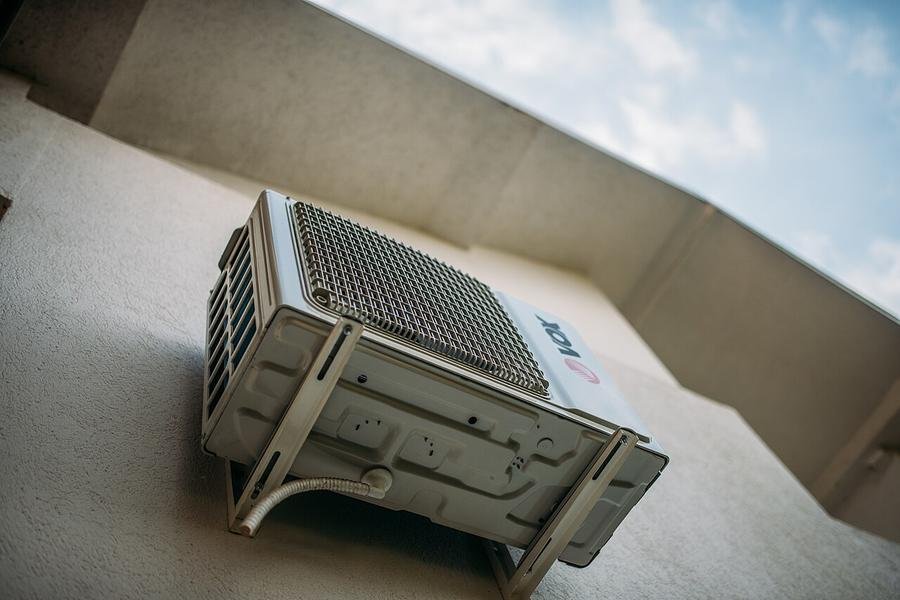
Image: Photo: Shixart1985, Wikimedia Commons, CC BY 2.0.
3. Getting it de-installed properly
This is the step most often rushed, and the one that decides whether the unit survives the move. A split AC holds refrigerant in a closed circuit; cutting the pipes releases that gas and leaves the system open to moisture.
- Switch off at the MCB, not just the remote, before any work starts.
- Ask for a pump-down: the technician runs the unit in cooling, closes the liquid valve so the compressor pulls the refrigerant back into the outdoor unit, then closes the suction valve. Refrigerant should be recovered, not vented.
- With the valves closed, disconnect the pipes and seal every open end with tape or caps.
- Drain and dry the indoor unit’s condensate tray. A wet tray wrapped in packing material is the quickest route to mould.
- Lower the outdoor unit with two people and proper support, never over a balcony edge on a rope alone, and check what the society permits for the lift.
- Carry the outdoor unit upright. If it has to lie down, stand it upright again and leave it several hours before running it.
- Note the model and serial number, and keep the remote.
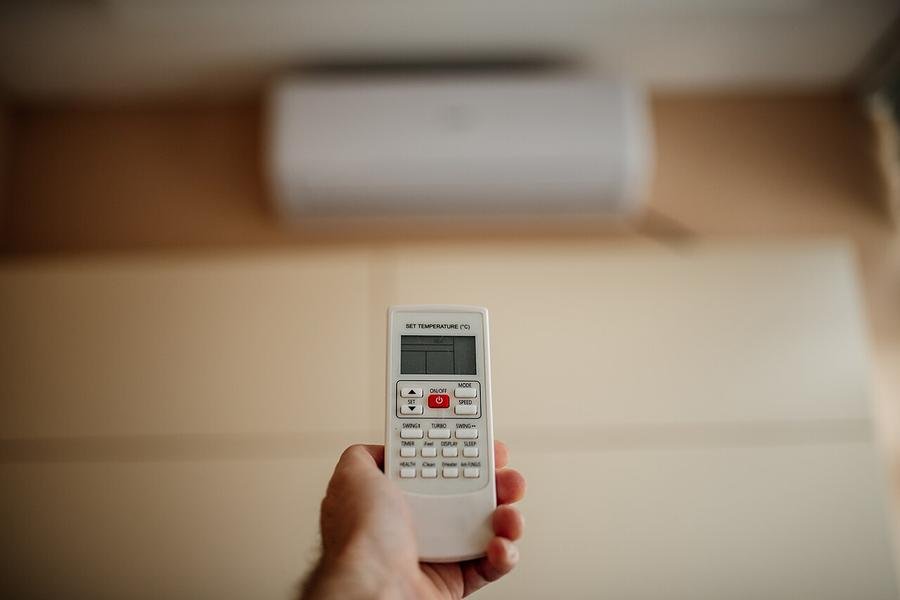
Image: Photo: Shixart1985, Wikimedia Commons, CC BY 2.0.
4. What buyers and refurbishers check
Whether you sell to an individual or a refurbisher, the same things decide the assessment. Knowing them early saves a wasted visit.
- Year of manufacture and model number, both on the outdoor unit’s rating plate.
- Split or window, and tonnage.
- Inverter or fixed speed, which affects running cost and resale interest.
- A cooling test: it should reach temperature, not simply switch on.
- Compressor behaviour at startup; knocking or hard starting is a red flag.
- Refrigerant type. R-22 units are harder and costlier to service than R-32 or R-410A.
- Physical condition: rust on the casing, bent condenser fins, the indoor blower and drain, and water damage or repair on the PCB.
- Accessories: remote, mounting plate, and the original bill and warranty card if you have them.
Clean the filters before a viewing, and have the unit running when the buyer arrives.
5. Paperwork and a clean handover
A short paper trail prevents most disputes, especially in rented flats.
- If you are a tenant, check the leave and licence or rent agreement first. An AC you installed is normally yours to take, but written clarity beats a fight over the deposit.
- Add the AC to the flat’s inventory or handover list, with model and serial number, so it is clear it leaves with you.
- Get a simple acknowledgement from the buyer or service, with model, serial number and date.
- If the unit is on an Annual Maintenance Contract, check whether it can be cancelled or transferred.
6. Beyond repair: the e-waste route
An air conditioner that no longer cools, or whose compressor or PCB has failed, is e-waste. It should not go into ordinary building waste or be broken up in the open.
- Use an authorised e-waste recycler. Many collect from homes, and you can ask for a receipt.
- Avoid informal dismantlers who cut the circuit and release refrigerant and oil in the open.
- For a smart or Wi-Fi unit, reset it to factory settings and remove it from the app.
- Take the batteries out and dispose of them separately.
- If only one half has failed, ask whether the other is serviceable. Reusing it beats scrapping the set.
Before you close the door
Most of this depends on timing. Deciding a fortnight early gives you room to book a technician, inform both societies and choose a route for the unit. Deciding on moving day usually means leaving a working AC behind.
About the author
Supersavvy is a Mumbai-based home-services and appliance business, founded in 2019. It buys old ACs and also handles appliance repair, servicing and installation. More on handing an old air conditioner over in Mumbai at Supersavvy.
Free advice, no obligation
Need help buying a property?
An Asraa advisor guides you from shortlist to possession — with price sheets, site visits, loans and paperwork. No brokerage charged to buyers.