
 Asraa Realty
The Occupation Certificate Most Buyers Forget to Ask For
Sale deed, title deed, encumbrance certificate, RERA registration — ask any first-time homebuyer what they checked before signing, and you'll hear this familiar list. Almost no one mentions the Occupation Certificate, commonly called the OC.
Of every document in a property transaction, the OC is arguably the one that determines whether the building you're buying into is even legally allowed to be lived in. This guide covers what it certifies, why buyers skip it, the real risks of a missing OC, and exactly how to verify one before you sign anything.
Without an OC, a building — no matter how complete it looks — remains, in the eyes of the law, an unauthorized or unfinished structure.
Get Your OC Verified → 5Critical Risks If SkippedWhat It Certifies
What the Occupation Certificate Actually Certifies
The OC isn't a formality stapled onto the paperwork at the end of construction. It's the local authority's official sign-off that the building:
- Was built in accordance with the approved layout and building plan
- Complies with fire safety, structural, and civic infrastructure norms
- Has functioning water supply, sewage, and electricity connections as sanctioned
- Matches the number of floors, setbacks, and land use permitted by the original approval
Without it, a building — no matter how complete it looks — remains, in the eyes of the law, an unauthorized or unfinished structure.
 Common Blind Spot
Why Buyers Skip This Check
It's rarely deliberate negligence. The same four patterns show up again and again:
- The building already looks finished. Painted walls, working lifts, families already moved in next door — buyers assume the paperwork must be in order. It often isn't.
- Developers offer a Completion Certificate instead. A CC only confirms the structure is physically built — it does not certify the building is safe or legal to occupy. Only the OC does that.
- Agents and brokers rarely bring it up. Sale deed and encumbrance checks are standard talking points. The OC, a civic document rather than a registry one, often falls outside the routine script.
- Possession feels like the finish line. Once keys are handed over, most buyers mentally close the transaction.
What Happens If a Building Doesn't Have One
The consequences aren't hypothetical — they surface in very concrete, very expensive ways:
| Risk Area | Impact of Missing OC |
|---|---|
| Utility connections | Municipal bodies can refuse or delay permanent water, sewage, or power connections |
| Resale | Future buyers' lawyers and lenders will flag the missing OC, shrinking your buyer pool |
| Home loans | Many banks hesitate to finance resale purchases in buildings without an OC |
| Legal standing | The building can be classified as unauthorized, exposing residents to penalties or, in extreme cases, demolition orders |
| Property tax & registration | Some municipalities complicate tax assessment and further registrations without it |
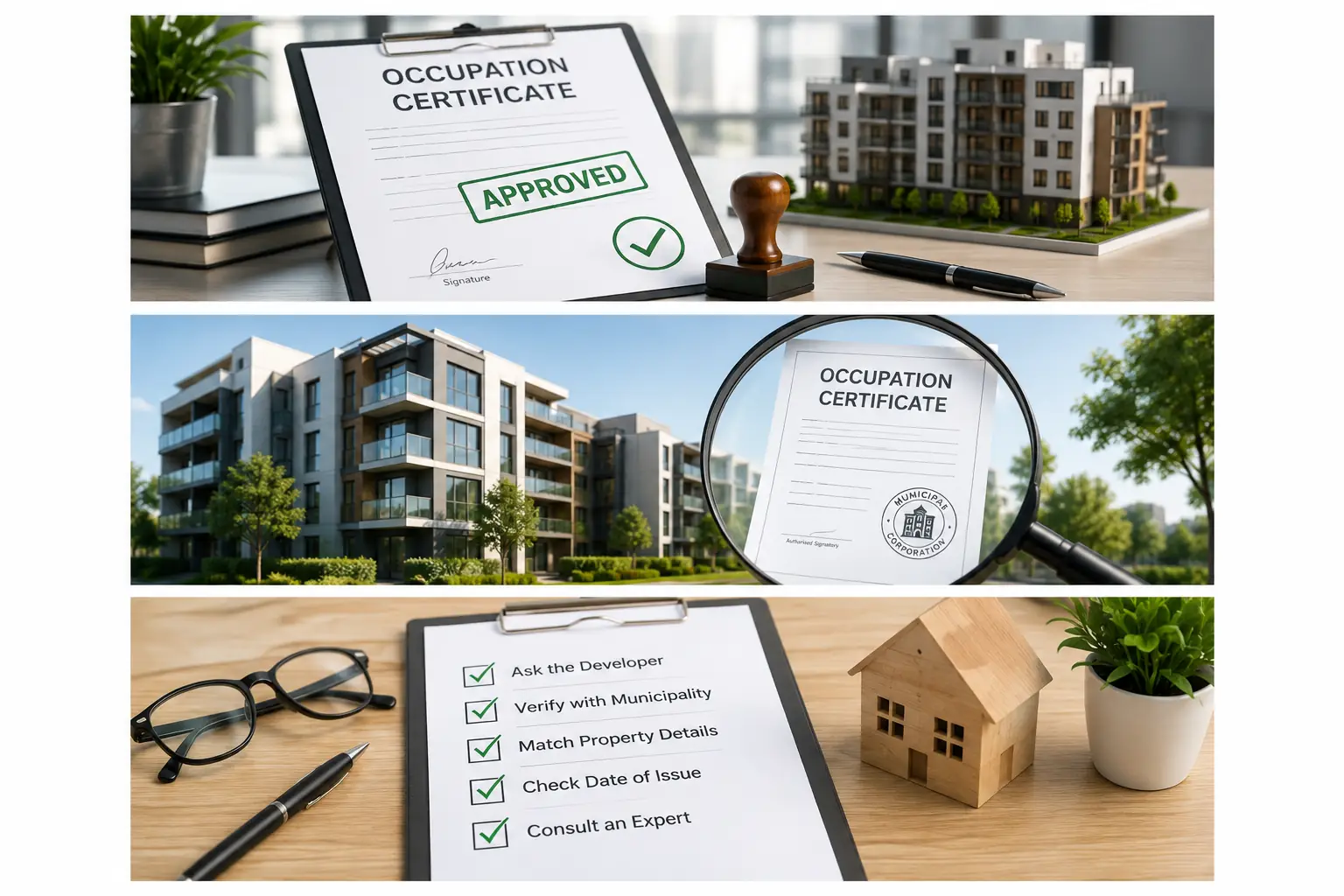
How to Actually Check for It
- Ask the developer directly. Request a copy of the OC by name — not "possession letter," not "completion certificate."
- Verify with the municipal authority. Most local bodies maintain records or portals where OC issuance can be cross-checked.
- Match the OC to your specific unit and phase. In large projects built in phases, an OC issued for Phase 1 does not cover Phase 3.
- Check the date against possession. The OC should ideally be issued before or around the possession date — not years later, or not at all.
- Involve a property lawyer. A quick legal review alongside the sanctioned plan can catch mismatches that aren't obvious to a layperson.
 Quick Gut-Check
If a developer offers explanations instead of the document itself — "it's in process," "it'll come after possession," "everyone gets it later" — treat that as a signal to slow down, not proceed.
The Bottom Line
The Occupation Certificate rarely gets asked about because it rarely gets talked about — not because it matters less than the other documents. In many ways, it matters more, because it's the one document that determines whether the building itself is legally allowed to house you.
Before you sign anything, before you get swept up in interiors and move-in dates, ask the one question most buyers forget: "Can I see the Occupation Certificate?"
Free Document CheckNot Sure If Your Building Has One?
Checking for an Occupation Certificate isn't something you should have to figure out alone. Send us your project name and unit details on WhatsApp — Asraa Realty will verify the OC status for you before you sign anything.
Want to read the regulation yourself? Check occupancy norms via MahaRERA or your local municipal corporation portal.
Chat with Asraa Realty on WhatsApp Free, no-obligation document check · usually replies within a few hoursFree advice, no obligation
Need help buying in Mumbai?
An Asraa advisor guides you from shortlist to possession — with price sheets, site visits, loans and paperwork. No brokerage charged to buyers.